


More Coverage


Twitter Coverage
JOIN SATYAAGRAH SOCIAL MEDIA


"वो जब याद आए, बहुत याद आए": Odisha renames Phulbani hospital to honor Swami Lakshmanananda Saraswati, granting ₹13 crore to preserve his legacy years after his tragic assassination by Naxals during the 2008 Kandhamal Janmashtami attack

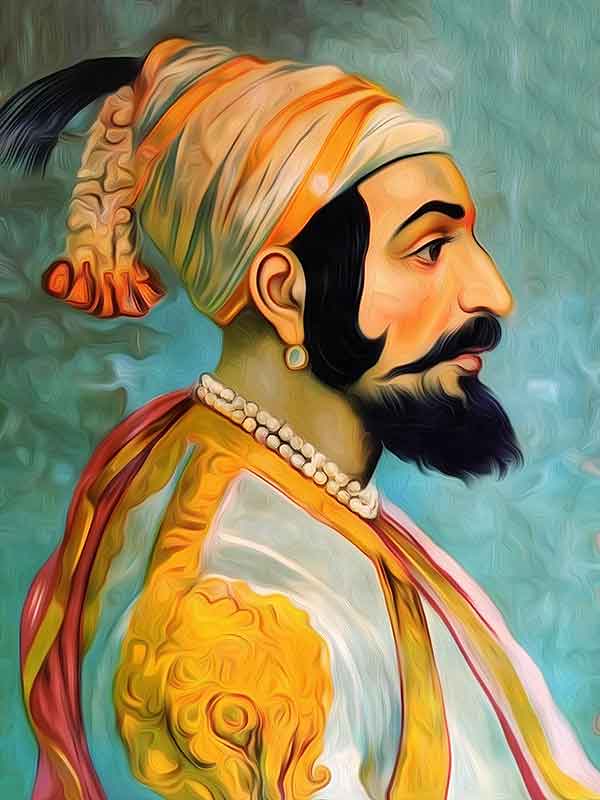
The Odisha state government has officially resolved to rename the Government Medical College and Hospital located in Phulbani, within the Kandhamal district, after the revered Hindu spiritual leader and dedicated social worker, Swami Lakshmanananda Saraswati.
Announcing this major administrative decision on Monday, 27th July, Chief Minister Mohan Charan Majhi emphasized that the rename serves as a formal tribute to Swamiji’s lifelong commitment, selfless service, and immense sacrifices for the indigenous tribal populations of the region. The primary objective is to preserve his memory and legacy for future generations.
In tandem with renaming the medical facility, the Chief Minister approved a substantial financial grant of ₹13 crore drawn from the Chief Minister’s Special Assistance (CMSA) fund. This significant monetary allocation is designated specifically for the holistic growth, modernization, and historical preservation of Swamiji’s established ashram, its associated ashram school, and the Jalespata Kanyashram.
According to a press statement released by the Chief Minister’s Office, “The funds have been allocated to preserve the heritage of Swamiji’s ashram and to keep his legacy alive.” The funding package is intentionally structured to upgrade both educational facilities and residential living quarters across the campus to offer better support to local students.
A detailed breakdown of the ₹13 crore development blueprint highlights several crucial infrastructure updates designed to elevate daily living and educational standards at the Jalespata premises:
- Hostel Construction: ₹5 crore is strictly set aside to construct a brand-new, modern 300-seat residential hostel for female students.
- Heritage Conservation: ₹3 crore is dedicated exclusively to the physical conservation and historical preservation of Swamiji’s heritage site.
- Basic Utility Security: To solve long-standing infrastructure deficits, ₹60 lakh has been allotted for a mega river lift water project aimed at guaranteeing a reliable, continuous water supply for the Jalespata Ashram, its school, and all surrounding residential quarters.
- General Upgrades: The remaining portion of the funds will cover critical construction work, including additional classrooms, secure boundary walls, expanded sanitation and toilet facilities, and the complete renovation of older hostel buildings.
|
The Life, Mission, and Social Contributions of Swami Lakshmanananda Saraswati
Swami Lakshmanananda Saraswati was a notable social reformer and spiritual figure who dedicated more than four decades of his life to uplifting, educating, and protecting the spiritual and cultural identity of Odisha's tribal communities. Strongly convinced that forest-dwelling populations required empowerment through self-reliance, he founded his primary ashram in Chakapad in 1966, following years of intense Himalayan penance.
Recognizing that formal education was indispensable for long-term social progress, he established the Gurukul Sanskriti Vidyalaya. This institution provided structured educational programs ranging from basic primary studies up to the university graduation level for young people in the locality.
Beyond formal academics, Swamiji was deeply involved in cultural preservation. He regularly spearheaded grassroots campaigns against cow slaughter and organized movements to reconnect indigenous people with their ancestral heritage through local traditions, such as public Jagannath yatras.
|
Opposition from Christian Missionaries and Local Threat Dynamics
Swami Lakshmanananda Saraswati maintained close ideological ties with the Rashtriya Swayamsevak Sangh (RSS) and was formally associated with the Vishva Hindu Parishad (VHP). For over 35 years, operating from his headquarters in Chakapad, he systematically raised cultural and religious awareness among tribal groups. He spoke out openly against forced or fraudulent religious conversions of tribals, actively countering conversion initiatives in remote rural areas by building trust and launching extensive outreach programs.
His persistent opposition to aggressive religious conversion networks across the tribal belt of Kandhamal made him a direct target for local criminal groups and opposing factions. As his educational institutions, Kanya Ashrams (girls' residential schools), and social welfare programs expanded, his growing popularity among tribal populations was viewed as a major obstacle by local Christian missionary conversion networks and active Naxal outfits, who historically opposed the integration of tribal communities into the social mainstream.
|
The Tragic Assassination on Janmashtami
The year 2008 represented a period when Left-Wing Extremism and Maoist violence reached peak intensity across Odisha. Tensions surrounding Swamiji’s ongoing social work culminated in a tragic attack on the night of 23rd August 2008, during the sacred celebration of Janmashtami.
While Swamiji was staying at the Kanya Ashram in Tumudibandh, surrounded by young resident students and dedicated followers, an armed group of Naxals equipped with automatic AK-47 rifles, homemade firearms, and heavy sharp blades forcibly entered the facility.
The 80-year-old spiritual leader, along with four of his close disciples—including a young boy—was brutally killed. The violent assault, during which Swamiji was repeatedly struck with axes, horrified the entire nation and took place in full view of approximately 130 young schoolgirls who resided at the facility.
Although Maoist outfits later formally claimed responsibility for the murders, the tragedy brought to light serious underlying concerns regarding the operational collaboration between local Naxalite cadres and regional conversion networks. Local observers and community leaders noted that a substantial number of local Maoist committee members operating in that district were themselves converts, sparking widespread debate over whether the Maoist umbrella was utilized to provide tactical cover for individuals seeking to eliminate prominent Hindu leaders.
The 2007 Communal Riots and the Judicial Findings
The 2008 tragedy was preceded by significant regional unrest. In 2007, Kandhamal experienced severe communal clashes between indigenous Hindu tribals and converted Christians over demands related to Scheduled Tribe (ST) status recognition. On 24th December 2007, Christian groups attacked and vandalized a local Durga Puja setup, subsequently physically assaulting Swami Lakshmanananda Saraswati when he attempted to calm the situation and intervene. This assault triggered widespread violent retaliation, during which numerous homes were set on fire.
In 2015, the official Justice Basudev Panigrahi Commission of Inquiry, tasked with investigating the 2007 riots, formally submitted its investigative report. The findings explicitly identified “rampant Christian conversions” as the core underlying cause driving the periodic violence in the region. The retired judge highlighted that despite existing anti-conversion laws in Odisha, unhindered missionary activity remained widespread. Kandhamal, a relatively small, heavily forested district, hosted over 1,200 churches and more than 300 active Christian organizations.
Legal accountability followed years later. In October 2013, a specialized court convicted and sentenced eight individuals—seven converted Christians and a Maoist commander named Pulari Rama Rao—to life imprisonment for their direct involvement in the murder of Swami Lakshmanananda Saraswati. Two additional high-profile Maoist leaders, Dunna Keshav Rao and Sabyasachi Panda, were also named as key accused in the conspiracy; both remain incarcerated while undergoing trial for multiple violent offenses, including the Kandhamal killings.
Media Coverage and Subsequent Fallout
The aftermath of the 2008 massacre sparked widespread grief, public indignation, and severe civil unrest throughout Kandhamal. However, mainstream media coverage at the time disproportionately focused on the subsequent civil unrest rather than the initial brutal execution of Swami Lakshmanananda Saraswati and his four followers.
As public protests erupted, attention shifted almost entirely toward the nature of the Hindu demonstrations. Consequently, the horrifying details of the ashram massacre were overshadowed in national news narratives, with several journalists drawing controversial comparisons between the local civil unrest and the 2002 Gujarat riots following the Godhra train attack.
Preserving a Legacy
The recent government actions—most notably the official renaming of the Phulbani Government Medical College and Hospital alongside the direct grant of ₹13 crore for the Jalespata complex—mark a formal state effort to honor Swamiji’s life work. By linking healthcare and educational infrastructure directly to his name, the administration ensures that his contributions to tribal welfare, education, and social unity remain recognized.
 Support Us
Satyagraha was born from the heart of our land, with an undying aim to unveil the true essence of Bharat. It seeks to illuminate the hidden tales of our valiant freedom fighters and the rich chronicles that haven't yet sung their complete melody in the mainstream.
While platforms like NDTV and 'The Wire' effortlessly garner funds under the banner of safeguarding democracy, we at Satyagraha walk a different path. Our strength and resonance come from you. In this journey to weave a stronger Bharat, every little contribution amplifies our voice. Let's come together, contribute as you can, and champion the true spirit of our nation.
 |  |  |
| ICICI Bank of Satyaagrah | Razorpay Bank of Satyaagrah | PayPal Bank of Satyaagrah - For International Payments |
If all above doesn't work, then try the LINK below:
DISCLAIMER: The author is solely responsible for the views expressed in this article. The author carries the responsibility for citing and/or licensing of images utilized within the text. The website also frequently uses non-commercial images for representational purposes only in line with the article. We are not responsible for the authenticity of such images. If some images have a copyright issue, we request the person/entity to contact us at This email address is being protected from spambots. You need JavaScript enabled to view it. and we will take the necessary actions to resolve the issue.


