



MORE COVERAGE


Twitter Coverage

Satyaagrah

Satyaagrah
Satyaagrah
Satyaagrah

Satyaagrah


JOIN SATYAAGRAH SOCIAL MEDIA


“A nation pawned for a price”: Former CIA officer John Kiriakou exposes how Pervez Musharraf sold out Pakistan’s sovereignty, handing its nuclear arsenal to the US in exchange for millions in aid and personal power

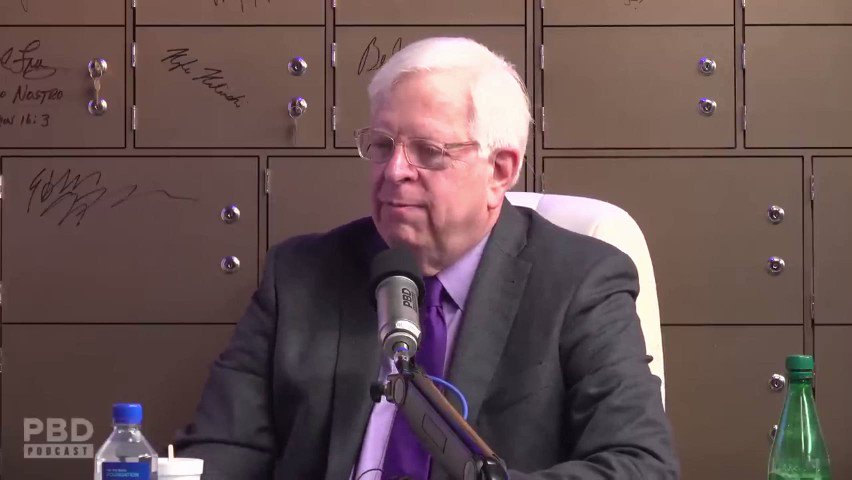
Former CIA officer John Kiriakou, who once led counter-terrorism operations in Pakistan, has made a shocking set of disclosures about the way the United States handled Pakistan and Saudi Arabia, exposing how global power equations in South Asia evolved behind the scenes.
|
In a candid conversation with ANI, Kiriakou claimed that Washington “bought” Pakistan’s former president Pervez Musharraf by pouring in huge sums of financial aid. He further alleged that this arrangement temporarily placed Pakistan’s nuclear weapons under U.S. control. Criticizing what he called America’s “situational morality,” Kiriakou accused his own government of double standards—supporting dictatorships whenever it aligned with U.S. interests.
“When I was stationed in Pakistan in 2002, I was told unofficially that the Pentagon controlled the Pakistani nuclear arsenal, that Musharraf had turned control over to the United States because he was afraid of exactly what you just described (nuclear weapons falling into terrorist hands).”
Kiriakou’s revelation echoes long-standing suspicions in intelligence circles that Washington exercised a covert grip on Islamabad’s defense programs after 9/11. Several media houses, including ANI, reported these remarks in late 2024, noting that they were among the boldest confirmations ever made by a U.S. insider.
|
Musharraf’s Double Game: Sponsoring Terror Against India
According to Kiriakou, Pakistan’s loyalty during Musharraf’s tenure was effectively purchased with millions in military and economic aid.
“The United States loves working with dictators. You don’t have to deal with public opinion or a free press. We basically bought Musharraf.”
He described how, under Musharraf, Washington gained unrestricted access to Pakistan’s intelligence and defense networks—a relationship heavily funded by American taxpayers.
“We gave millions and millions of dollars, and Musharraf let us do whatever we wanted.”
Despite this cooperation, Kiriakou alleged that Musharraf was playing both sides. While publicly supporting the U.S. war on terror, he covertly allowed Pakistan’s military to continue its anti-India operations.
“The Pakistani army didn’t care about Al-Qaeda. Their main concern was India. Musharraf pretended to be on our side against terrorism while actually sponsoring terror against India.”
His statements align with long-documented U.S. concerns over Islamabad’s “double game,” a pattern exposed multiple times by the U.S. Congress and think-tanks such as the Council on Foreign Relations (CFR).
“Strategic Patience”: U.S. Surprise Over India’s Restraint After Terror Attacks
Reflecting on India’s response to terrorism, Kiriakou said that the U.S. administration had expected India to retaliate militarily after the 2001 Parliament attack and the 2008 Mumbai attacks, but New Delhi chose restraint.
“At the CIA we called the Indian policy strategic patience. The Indian government would have been perfectly within its rights to respond by striking Pakistan and they didn’t. And I remember at the White House people were saying, wow, the Indians are really exhibiting a very mature foreign policy here. We expected the Indians to strike back and they didn’t. And that kept the world from what might have been a nuclear exchange. Right? But India’s gotten to the point where they can’t risk strategic patience being misunderstood as weakness. And so they had to respond.”
This observation underscores a rare moment of admiration from American officials for India’s restraint, a policy that many analysts—including those at Brookings Institution—later credited with preventing an escalation into nuclear conflict.
Saudi Arabia Shielded A.Q. Khan from U.S. Action
Another revelation from Kiriakou involves Abdul Qadeer Khan, widely known as the father of Pakistan’s nuclear program. According to him, the CIA had plans to neutralize Khan, but those efforts were blocked after Saudi Arabia intervened.
“If we had taken the Israeli approach, we would have killed him. He was easy to find. But the Saudis told us, ‘Please leave him alone. We like A.Q. Khan. We’re working with him.’”
Kiriakou labeled that choice a “big mistake,” claiming the White House ordered both the CIA and the IAEA not to target Khan because of Saudi insistence.
“It had to be because the Saudis insisted.”
He further hinted that Riyadh harbored its own nuclear ambitions, noting,
“We always suspected that the Saudis wanted to develop a nuclear program. And looking at the current Saudi-Pakistan defence ties, they may be calling in their investment now.”
Experts have often connected these claims with long-standing Saudi investments in Pakistan’s nuclear projects.
“The World is Changing — Saudi, China and India are Rising”: Kiriakou
Kiriakou ended his interview with a scathing critique of U.S. foreign policy, accusing Washington of operating under a double standard.
“We like to claim that we stand for democracy and human rights, but that’s not true. The U.S. does whatever benefits it at that moment.”
He explained that America’s ties with Saudi Arabia were purely transactional, built entirely on oil and arms trade.
“Our entire policy with Saudi Arabia is simple, we buy their oil, and they buy our weapons.”
Recalling a personal encounter, he quoted a Saudi guard who told him:
“You’re the hired help. We paid for you to come here and defend us.”
According to Kiriakou, the global power structure is undergoing a massive transformation.
“The U.S. doesn’t need Saudi oil anymore, and the Saudis know it. They’re hedging their bets by improving ties with China and India. The world is changing, and we’re watching that transformation unfold.”
His closing words mirror the shifting reality of modern geopolitics, where emerging powers like India, China, and Saudi Arabia are asserting greater autonomy on the global stage.
 Support Us
Satyagraha was born from the heart of our land, with an undying aim to unveil the true essence of Bharat. It seeks to illuminate the hidden tales of our valiant freedom fighters and the rich chronicles that haven't yet sung their complete melody in the mainstream.
While platforms like NDTV and 'The Wire' effortlessly garner funds under the banner of safeguarding democracy, we at Satyagraha walk a different path. Our strength and resonance come from you. In this journey to weave a stronger Bharat, every little contribution amplifies our voice. Let's come together, contribute as you can, and champion the true spirit of our nation.
 |  |  |
| ICICI Bank of Satyaagrah | Razorpay Bank of Satyaagrah | PayPal Bank of Satyaagrah - For International Payments |
If all above doesn't work, then try the LINK below:
DISCLAIMER: The author is solely responsible for the views expressed in this article. The author carries the responsibility for citing and/or licensing of images utilized within the text. The website also frequently uses non-commercial images for representational purposes only in line with the article. We are not responsible for the authenticity of such images. If some images have a copyright issue, we request the person/entity to contact us at This email address is being protected from spambots. You need JavaScript enabled to view it. and we will take the necessary actions to resolve the issue.


