



MORE COVERAGE


Twitter Coverage

Satyaagrah

Satyaagrah
Satyaagrah
Satyaagrah

Satyaagrah


JOIN SATYAAGRAH SOCIAL MEDIA


"Elect a Clown, Expect a Circus": Former Australian leader Tony Abbott warns that the gratuitous alienation of India by the Trump administration and his reckless favoritism toward Pakistan are risking Western security as chaos intensifies

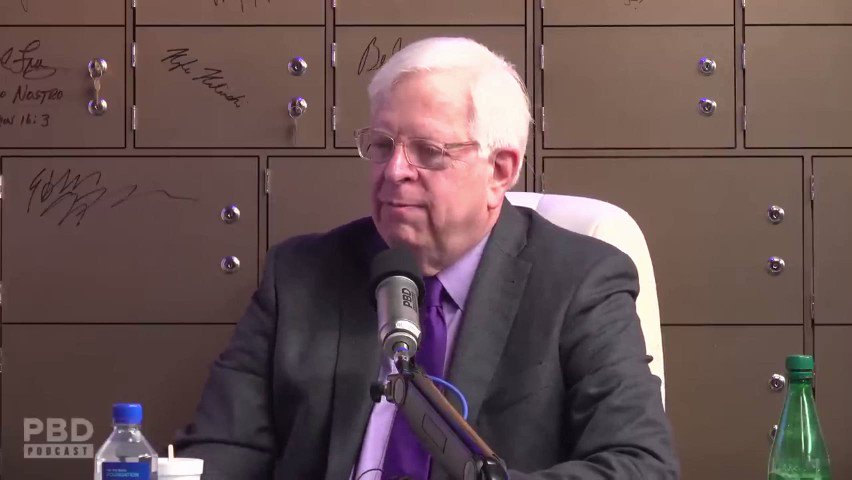
Former Australian Prime Minister Tony Abbott has openly criticised United States President Donald Trump, saying that Washington’s approach toward India has been one of the most significant diplomatic missteps of Trump’s presidency. Abbott warned that unnecessarily straining relations with New Delhi risks damaging a partnership that many global strategists consider essential for stability in the Indo-Pacific region.
In a conversation with NDTV, Abbott made it clear that while he respects aspects of Trump’s leadership, he does not support every element of the American president’s international strategy. During the discussion, Abbott pointed to a series of decisions taken by the Trump administration that he believes complicated relations with India, a country that the United States has increasingly viewed as a key ally in balancing power dynamics in Asia.
|
Unnecessary Diplomatic Friction with India
Abbott said that several policy decisions by Washington had created avoidable tensions with New Delhi. These moves, he argued, were not only diplomatically unhelpful but also confusing given the importance of the US–India partnership in regional security and global trade.
During the interview, Abbott stated plainly, “I am not a universal admirer of the Trumpian foreign policy.” He then pointed to what he believes is a major diplomatic mistake made by the US president. In his words, “One of the biggest mistakes that President Trump has made up till now has been gratuitously alienating India.”
According to Abbott, three developments in particular triggered concerns in India. These included the imposition of punitive tariffs on Indian exports, Trump’s controversial statements suggesting he could mediate between India and Pakistan on the long-standing Kashmir dispute, and Washington’s decision to host Pakistan’s army chief, General Asim Munir, at the White House.
The meeting with Pakistan’s powerful military leader drew particular attention in India. Abbott explained that the symbolism of welcoming Pakistan’s top military figure was troubling in New Delhi because of Islamabad’s long history of accusations regarding support for militant groups operating across the border.
Abbott highlighted this concern by stating, “Pakistan undoubtedly has sponsored terrorism against India and has been doing so intermittently for a long time.” His remark reflects a widely discussed issue in international diplomacy, where India has repeatedly accused Pakistan of backing militant organisations targeting Indian territory. These accusations and the broader security tensions have shaped South Asian geopolitics for decades. More background on this dispute can be found through reporting by organizations such as the Council on Foreign Relations and the Brookings Institution.
|
Trade Disputes and a Partial Diplomatic Reset
Before these political disagreements surfaced, relations between Washington and New Delhi had already been under pressure due to trade disagreements. During Trump’s presidency, the United States imposed reciprocal tariffs of 25 percent on several categories of Indian exports. Alongside this measure, an additional 25 percent tariff was introduced in response to India’s continued purchase of Russian oil.
Washington framed these steps as part of broader efforts to pressure countries into reducing economic engagement with Moscow amid the ongoing conflict in Ukraine. India, however, maintained that its energy purchases were driven by economic needs and national interest.
Earlier this year, however, tensions between the two countries showed signs of easing. In February, Trump announced a revised trade arrangement with India that lowered tariffs on several Indian goods entering the American market. The move came after India reportedly indicated that it would consider reducing its purchases of Russian oil while the war in Ukraine continues.
The agreement was publicly framed by Trump as evidence of the strong personal relationship he claims to share with Indian Prime Minister Narendra Modi. Trump has frequently spoken about this rapport, once describing Modi as “one of my greatest friends.”
Analysts have long argued that economic cooperation is a central pillar of the US–India partnership. Institutions such as the Center for Strategic and International Studies and the Observer Research Foundation regularly highlight the importance of trade, technology cooperation, and defence ties between the two countries.
Abbott’s Perspective on the Middle East Conflict
During the same interview, Abbott also discussed the rapidly evolving conflict involving Iran, the United States and Israel. While the situation continues to develop, he cautioned that it remains too early to determine whether the fighting could ultimately lead to regime change in Tehran.
Reflecting on the uncertainty surrounding the conflict, Abbott said, “We can’t say for sure whether there will be a regime change.” He emphasised that despite the pressure Iran faces from military strikes and international sanctions, the country’s leadership still retains meaningful support among sections of its population.
At the same time, Abbott suggested that the conflict has already inflicted significant damage on Iran’s military infrastructure and nuclear programme. In his view, the most plausible outcome may be a weakened Iranian government that continues to hold power but with limited capacity to influence events outside its borders.
He described this scenario bluntly, saying, “The worst outcome that we could have from this is a defanged Islamist theocracy.” Abbott argued that whatever leadership ultimately remains in control of Iran will likely operate with reduced military reach and diminished ability to project power across the Middle East.
Observers of the conflict have noted similar shifts in the pattern of military activity. Iranian attacks appear to have become less frequent in recent days, while operations conducted by the United States and Israel have increased in intensity. Reports suggest that these strikes have focused largely on government facilities and military infrastructure rather than civilian targets.
Further analysis on the regional dynamics of the conflict has been published by groups such as the International Institute for Strategic Studies and the Carnegie Endowment for International Peace.
Conflict Escalates Across the Region
Despite these strategic assessments, the situation across the Middle East remains extremely volatile. Shortly after Abbott made his remarks, reports emerged that Iran had launched additional missiles and drones toward Israel as well as several Gulf countries that host American military installations.
Explosions were heard across parts of Israel as its air defence systems intercepted incoming projectiles. Meanwhile, several Gulf states including the United Arab Emirates, Kuwait, Qatar, Bahrain and Saudi Arabia reported attacks connected to the expanding regional confrontation.
The developments underline how quickly the conflict could spread beyond its current boundaries, drawing in more countries and intensifying an already fragile security environment in the region.
A Complex Strategic Balance for Washington
Abbott’s comments ultimately point to a larger strategic challenge facing Washington. The United States must navigate several major global crises at once. On one hand, it remains deeply involved in escalating tensions in the Middle East. On the other, it is trying to maintain strong partnerships across Asia, particularly with India.
Many Western governments see India as a cornerstone of the Indo-Pacific security framework, especially as geopolitical competition intensifies in the region. Maintaining stable relations with New Delhi is therefore viewed as crucial not only for trade and diplomacy but also for long-term strategic balance.
Against this backdrop, Abbott’s warning about “gratuitously alienating India” reflects a broader concern among international policymakers that diplomatic missteps could weaken alliances at a time when global stability already faces multiple pressures.
 Support Us
Satyagraha was born from the heart of our land, with an undying aim to unveil the true essence of Bharat. It seeks to illuminate the hidden tales of our valiant freedom fighters and the rich chronicles that haven't yet sung their complete melody in the mainstream.
While platforms like NDTV and 'The Wire' effortlessly garner funds under the banner of safeguarding democracy, we at Satyagraha walk a different path. Our strength and resonance come from you. In this journey to weave a stronger Bharat, every little contribution amplifies our voice. Let's come together, contribute as you can, and champion the true spirit of our nation.
 |  |  |
| ICICI Bank of Satyaagrah | Razorpay Bank of Satyaagrah | PayPal Bank of Satyaagrah - For International Payments |
If all above doesn't work, then try the LINK below:
DISCLAIMER: The author is solely responsible for the views expressed in this article. The author carries the responsibility for citing and/or licensing of images utilized within the text. The website also frequently uses non-commercial images for representational purposes only in line with the article. We are not responsible for the authenticity of such images. If some images have a copyright issue, we request the person/entity to contact us at This email address is being protected from spambots. You need JavaScript enabled to view it. and we will take the necessary actions to resolve the issue.


